Why Is My Yard Holding Water After Every Rainstorm? 7 Causes Illinois Homeowners Should Know
If you've looked out your window after a rainstorm and noticed what appears to be a brand-new pond forming in your backyard, you're not alone.
Here in Illinois, we've had our fair share of weather extremes lately. One week we're dealing with scorching temperatures, and the next we're watching thunderstorms roll through and dump inches of rain in a matter of hours. While some standing water immediately after a storm is normal, puddles that stick around for days are usually a sign that something else is going on.
The good news? Most drainage problems have an identifiable cause—and often a solution.
Let's take a look at seven common reasons your yard may be holding water after every rainstorm.
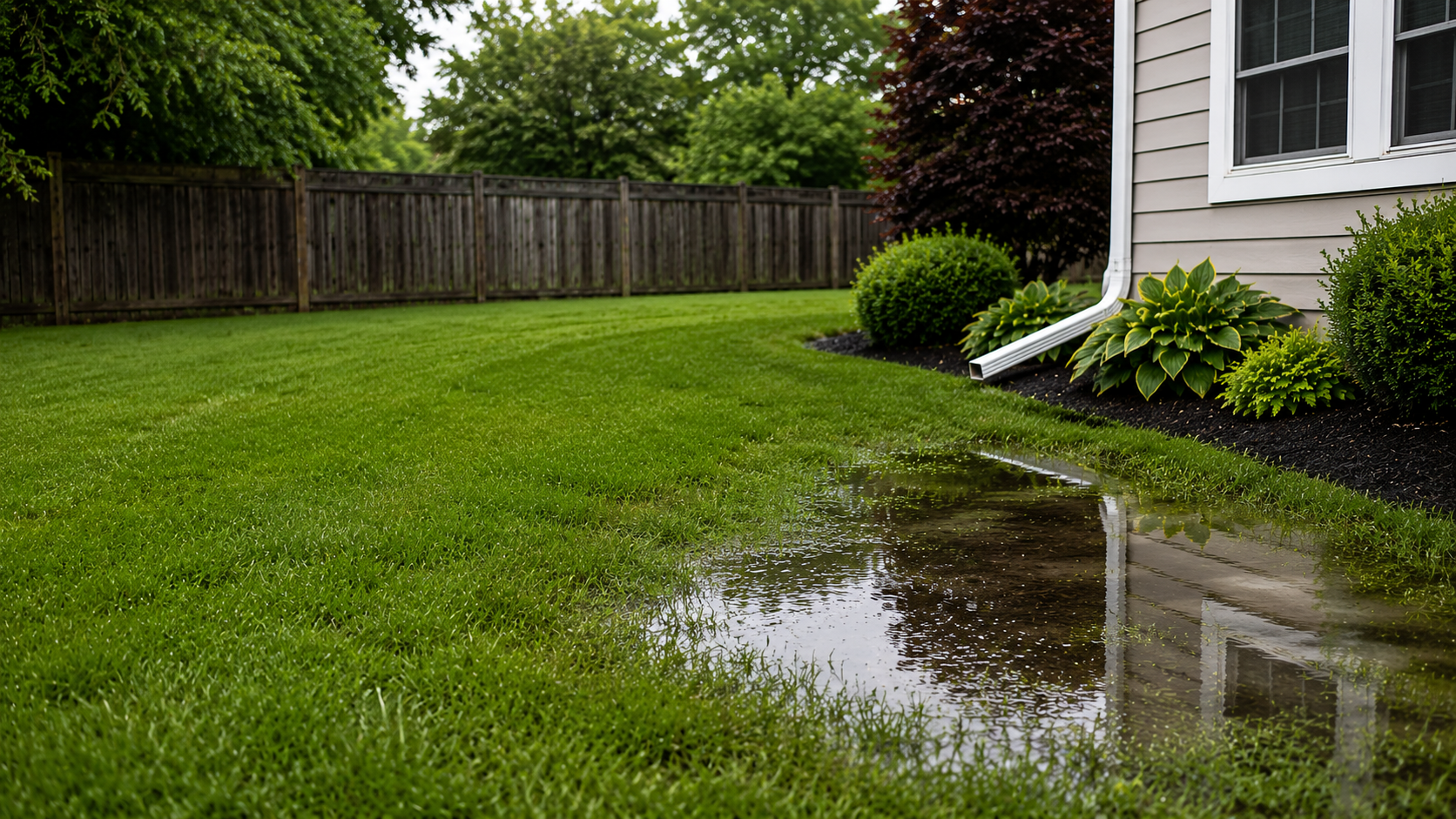
Your Yard Has Poor Grading
In simple terms, your yard should gently slope away from your home and toward areas where water can safely drain. If parts of your lawn sit lower than the surrounding ground, water naturally collects there instead of moving away.
Think of it like setting a bowl out in the rain. If your yard has low spots, those areas become the bowl.
Signs of grading problems:
Water pools in the same areas after every storm
Wet spots linger long after neighboring lawns have dried
Water collects near your home's foundation
Poor grading is especially common in newer developments where settling occurs over time.
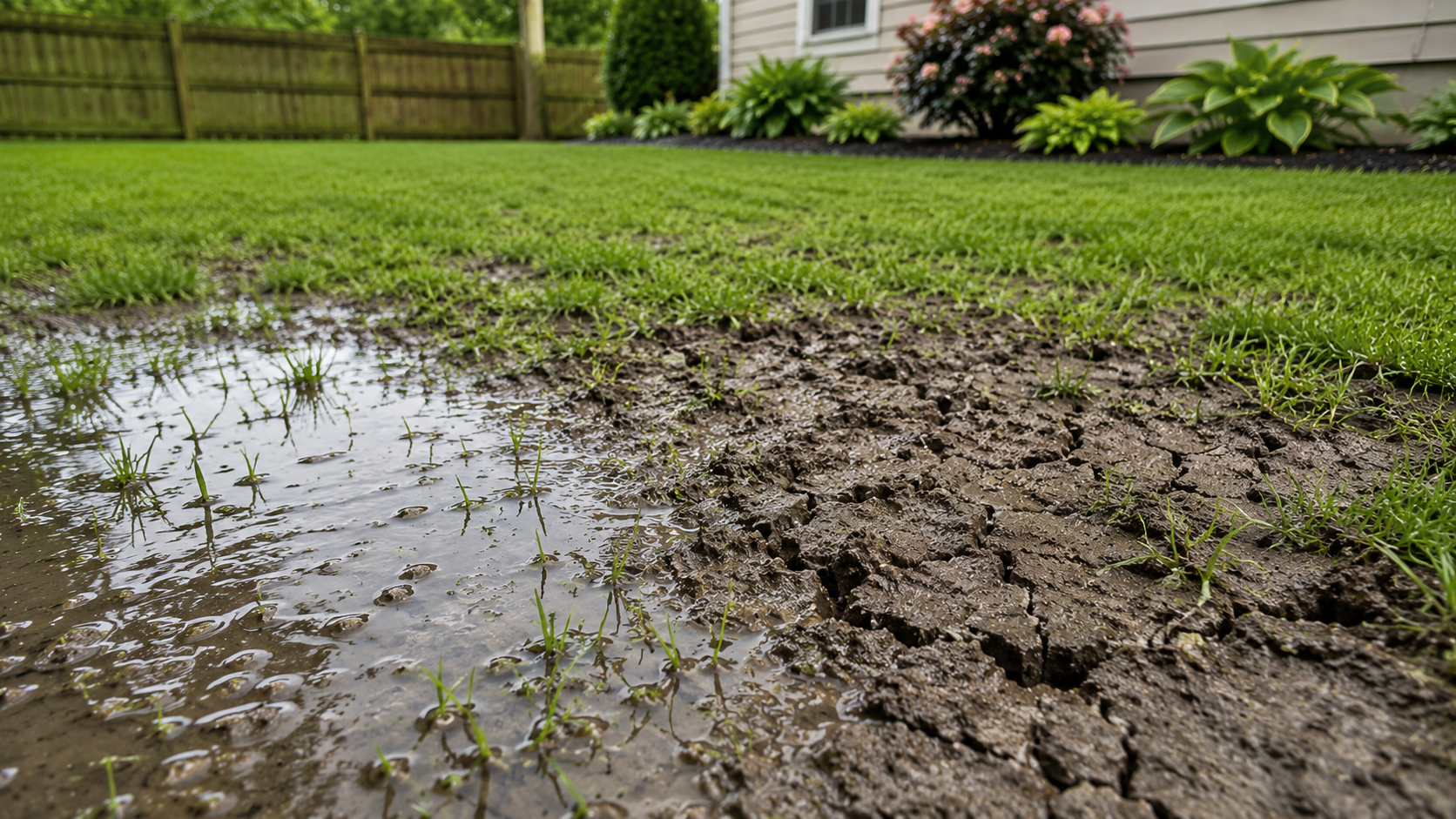
2. Clay Soil is Slowing Down Water Absorption
If you've lived in Illinois for very long, you've probably encountered our famous clay soil.
Clay soil has some benefits. It holds nutrients well and can support healthy turf. The downside is that it absorbs water much more slowly than other soil types.
When a heavy rain arrives faster than the soil can absorb it, water begins to sit on the surface.
Common signs of clay-heavy soil:
Water puddles throughout the yard
Soil feels sticky after rain
Ground becomes hard and compacted during dry periods
Unfortunately, clay soil isn't something we can simply wish away. If that worked, we'd all be doing rain dances in reverse.
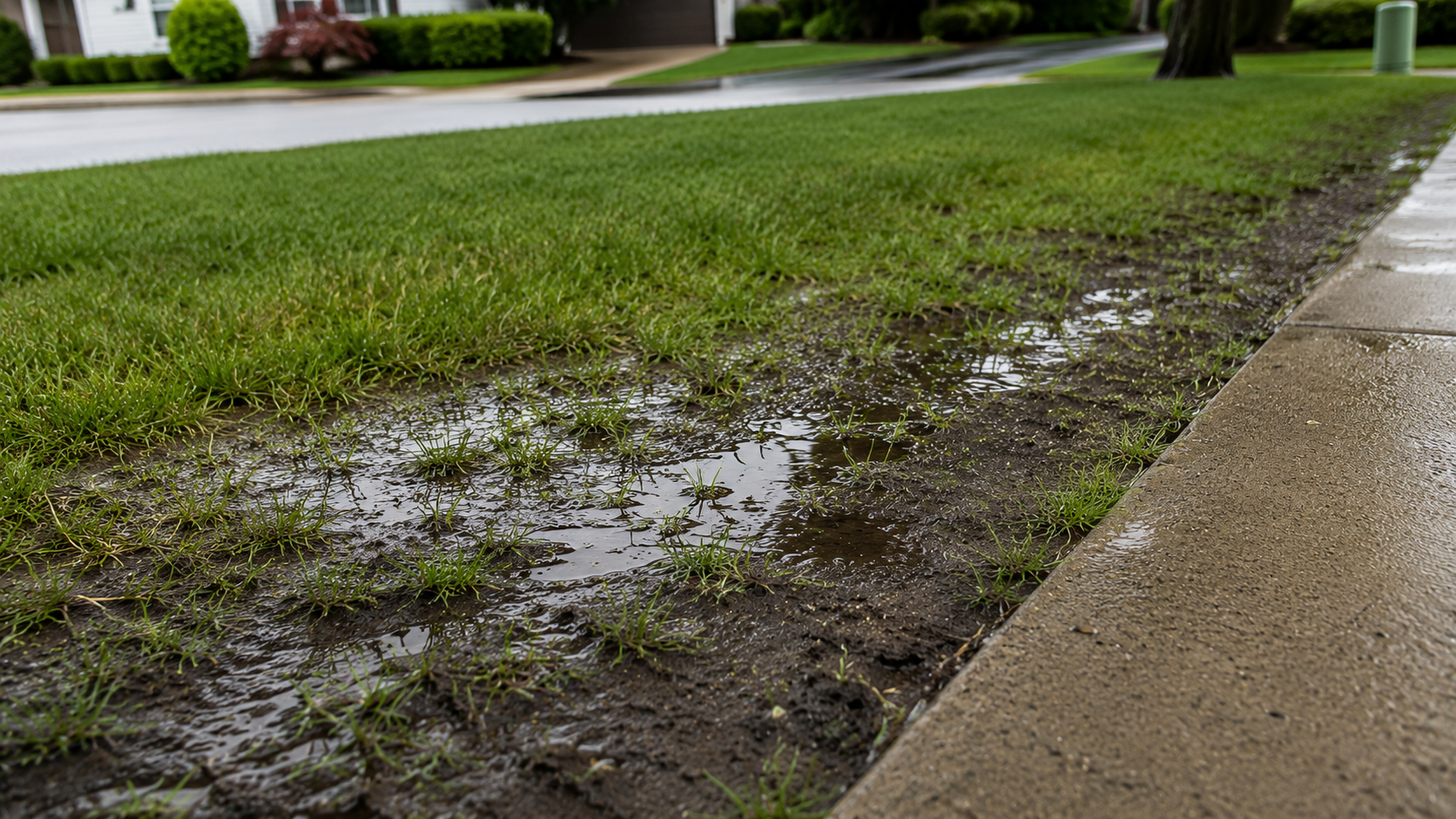
3. Soil Compaction is Preventing Water From Soaking In
Over time, lawns take a beating.
Foot traffic, pets, lawn equipment, construction projects, and even years of mowing can compress the soil beneath your grass.
When soil becomes compacted, water struggles to penetrate the surface. Instead of soaking in, it either pools on top or runs off into other areas of the yard.
Signs of compacted soil:
Water sits on the surface after rainfall
Thin or struggling turf
Hard ground that's difficult to dig into
Annual core aeration is one of the most effective ways to relieve soil compaction and improve drainage.
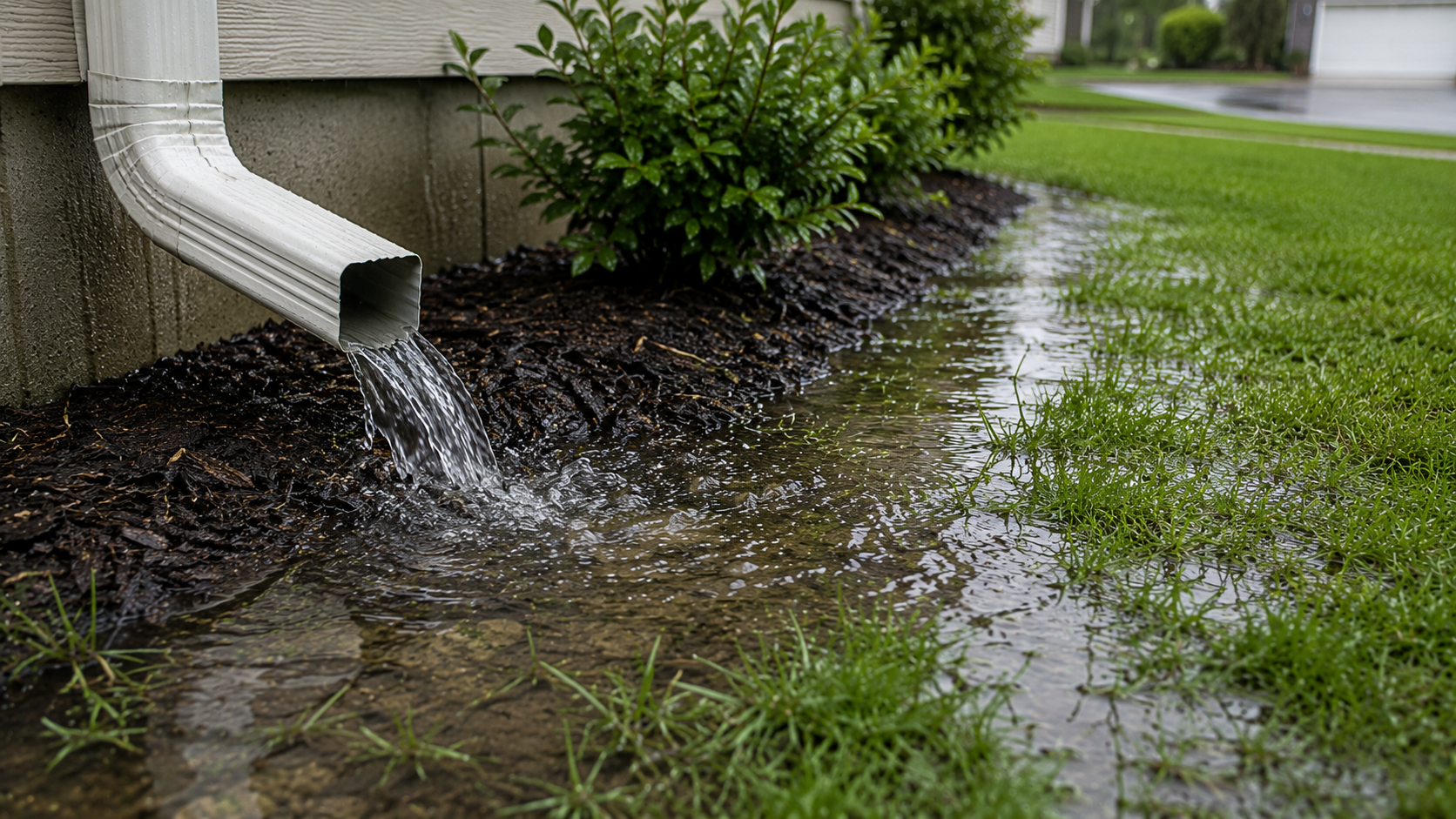
4. Your Downspouts Are Dumping Water in the Wrong Place
Sometimes the issue isn't your lawn at all.
A single roof can collect a tremendous amount of water during a summer storm. If your downspouts discharge that water near your home's foundation or into one area of the yard, you're essentially creating a concentrated flood zone.
Check for:
Downspouts ending only a few feet from the house
Erosion beneath downspout outlets
Constantly wet areas near corners of the home
Extending downspouts can often make an immediate difference and is one of the first things we look at when evaluating drainage concerns.
5. Excessive Thatch Is Trapping Moisture
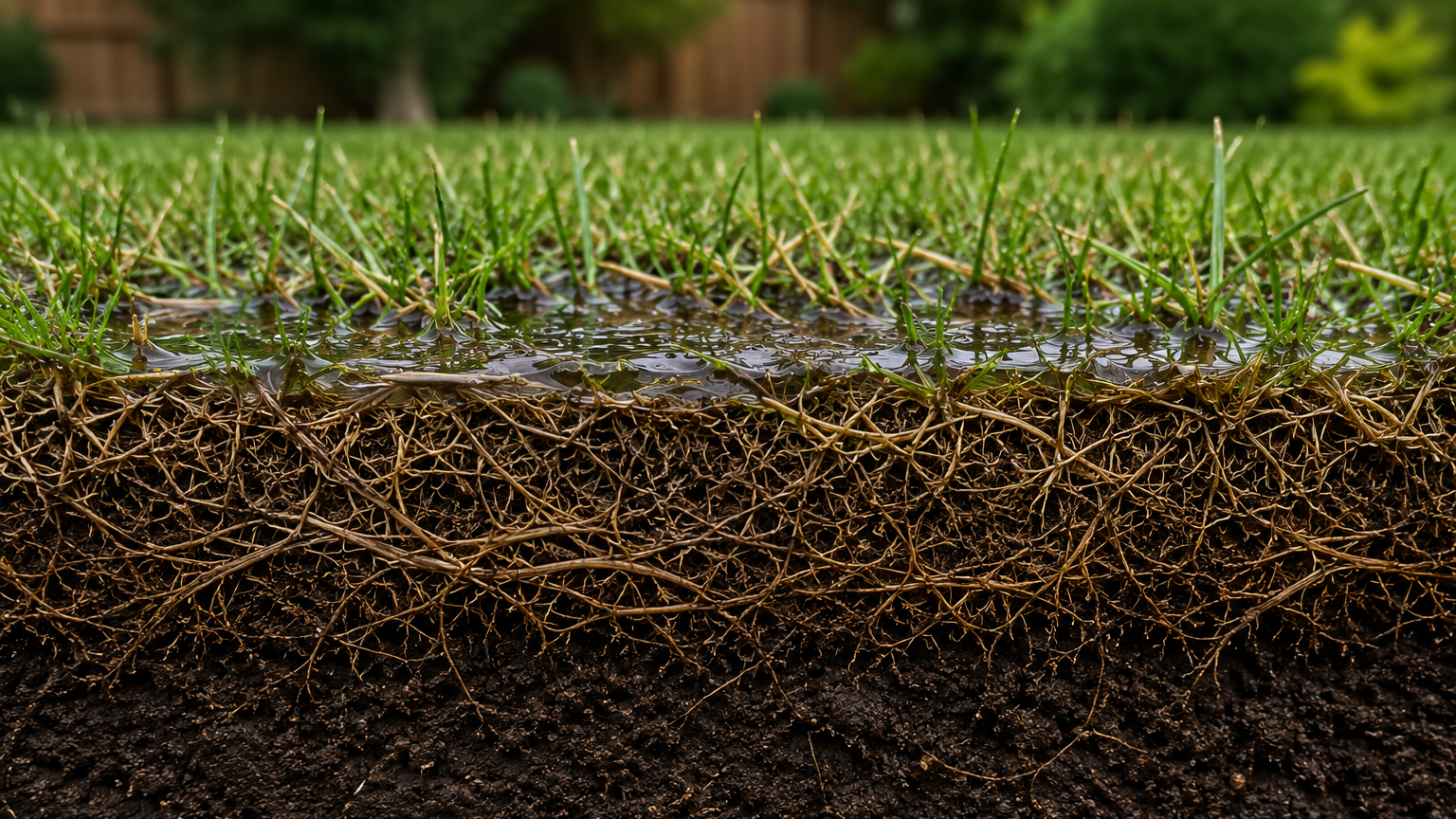
Thatch is the layer of dead grass stems and roots that accumulates between the soil and your living turf.
A small amount of thatch is perfectly normal. Too much of it, however, can create problems.
Instead of allowing water to move efficiently into the soil, thick thatch can act like a sponge, trapping moisture near the surface.
Signs of excessive thatch:
A spongy feeling when walking across the lawn
Water lingering on the surface
Uneven grass growth
If your lawn feels like you're walking on a damp mattress, excessive thatch may be part of the problem.
6. Underground Drainage Systems May Be Clogged
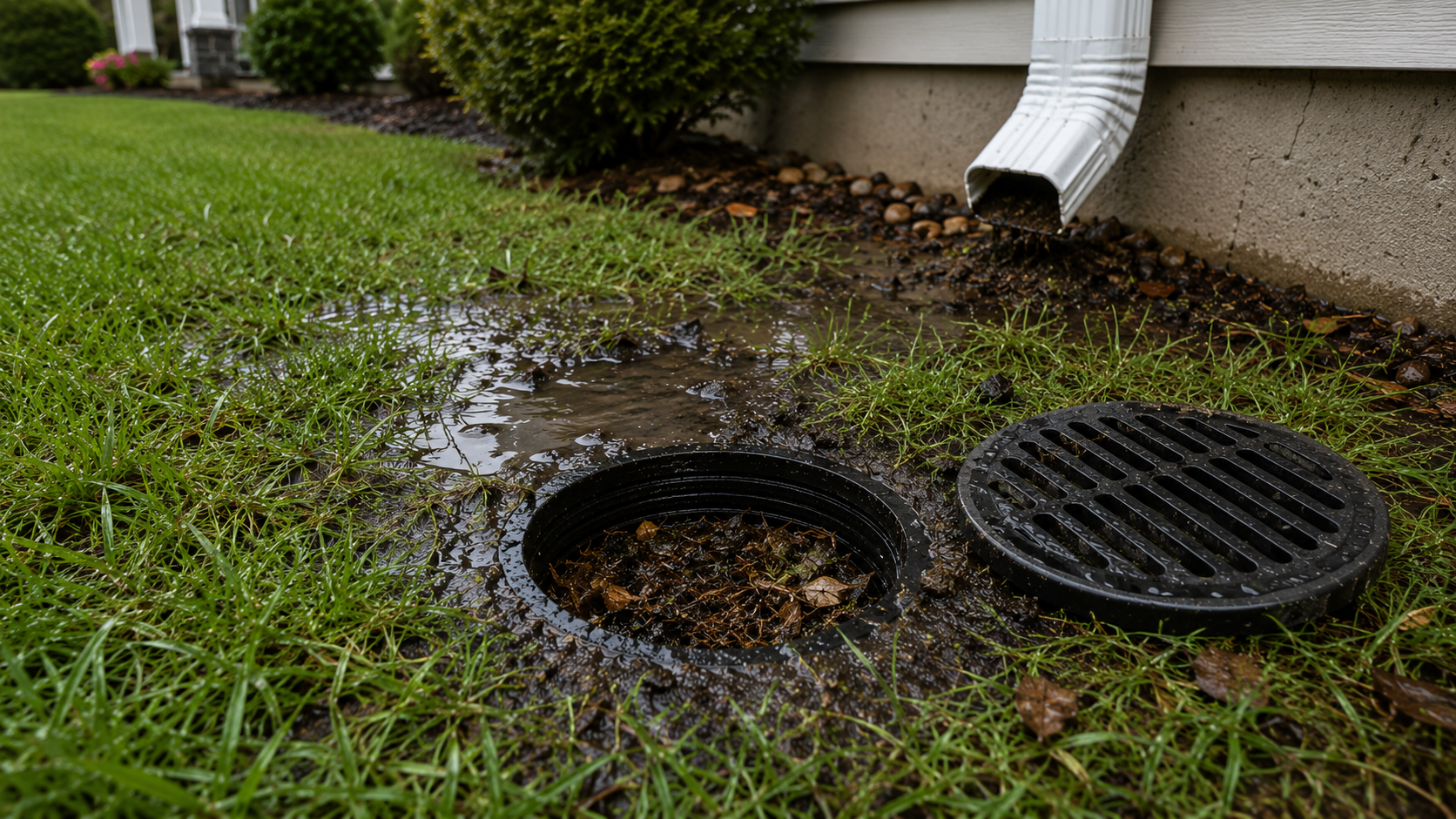
Some properties have drainage systems installed beneath the surface, such as French drains, drain tile systems, or catch basins.
These systems can work exceptionally well—until they don't.
Over time, roots, soil, leaves, and other debris can clog drainage components and prevent them from moving water efficiently.
Warning signs:
Drainage issues that seem to appear suddenly
Overflowing catch basins
Water backing up during moderate storms
A professional inspection can often identify hidden issues before they become larger problems.
7. Your Yard Is Simply Receiving More Water Than It Can Handle
Sometimes several small issues combine to create one big problem.
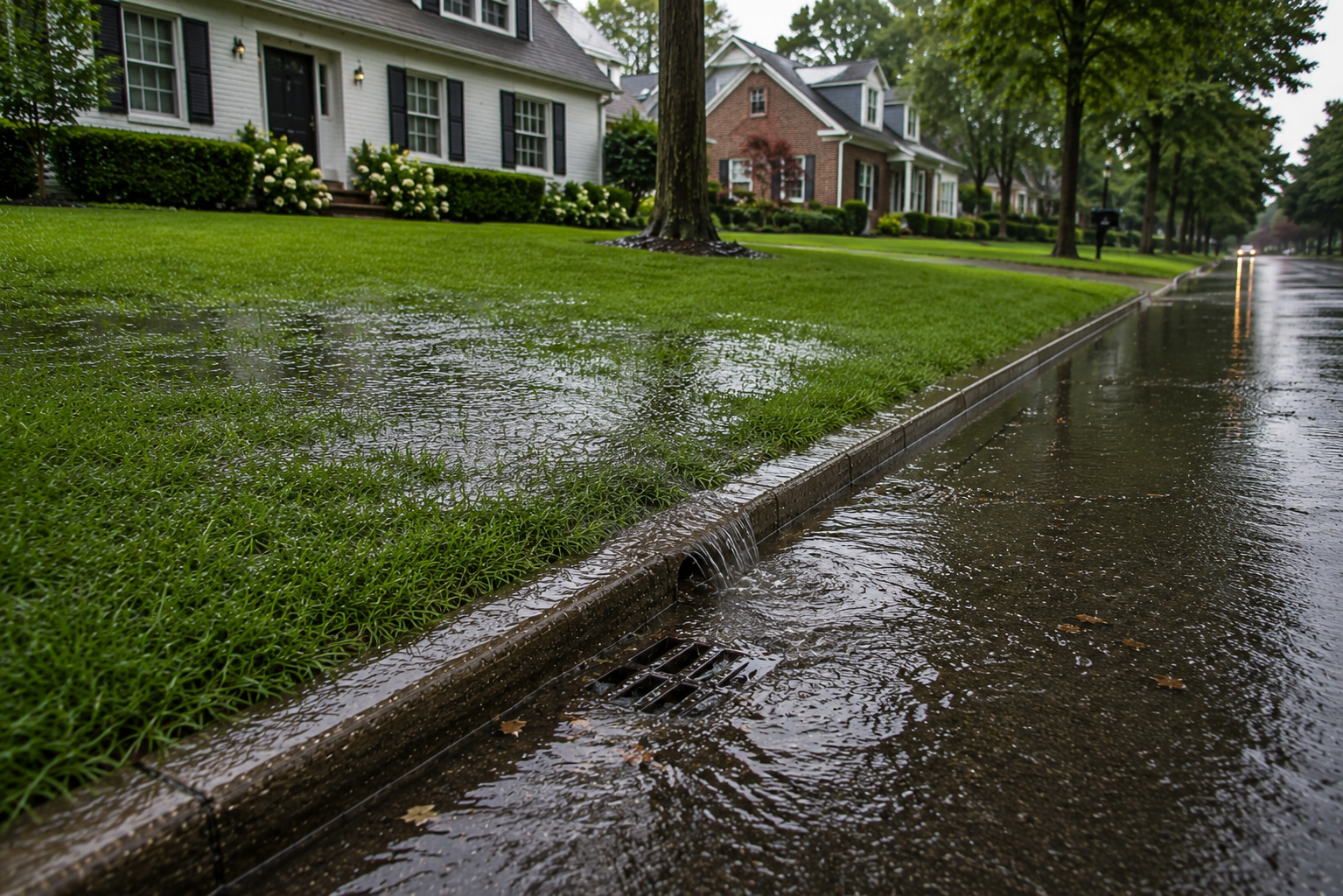
A yard with clay soil, mild compaction, poor grading, and heavy rainfall can quickly become overwhelmed. Even if each issue seems minor on its own, together they can prevent water from draining properly.
And let's be honest—Illinois weather doesn't always believe in moderation. We often go from dry conditions to torrential downpours seemingly overnight.
When that happens, existing drainage problems become much more noticeable.
Why You Shouldn’t Ignore Standing Water
Beyond being inconvenient, standing water can create several long-term issues for your property.
These include:
Lawn damage and thinning turf
Increased mosquito activity
Fungus and lawn disease
Plant and shrub decline
Soil erosion
Potential foundation concerns
The longer water remains in one area, the greater the likelihood of damage.
When It’s Time to Call a Professional
If water regularly sits in your yard for more than 24 to 48 hours after a rainstorm, it's worth taking a closer look.
The challenge with drainage issues is that the puddle you see is often just a symptom. The real cause could be grading, soil conditions, compaction, drainage infrastructure, or a combination of several factors.
At The Grounds Guys, we help homeowners throughout the area identify drainage problems and recommend practical solutions that fit their property and budget.
Because while a backyard pond may sound nice in theory, most homeowners would rather not stock it with fish.

Need Help Solving a Drainage Problem?
If you're tired of dealing with soggy spots, standing water, or recurring drainage issues after every storm, our team is here to help.
Contact The Grounds Guys today to schedule a property evaluation and learn how we can help improve drainage, protect your landscape, and keep your yard looking its best all season long.
